Why the Salesforce ecosystem keeps making major AI bets without independent due diligence
Before you buy a house, you get an inspection.
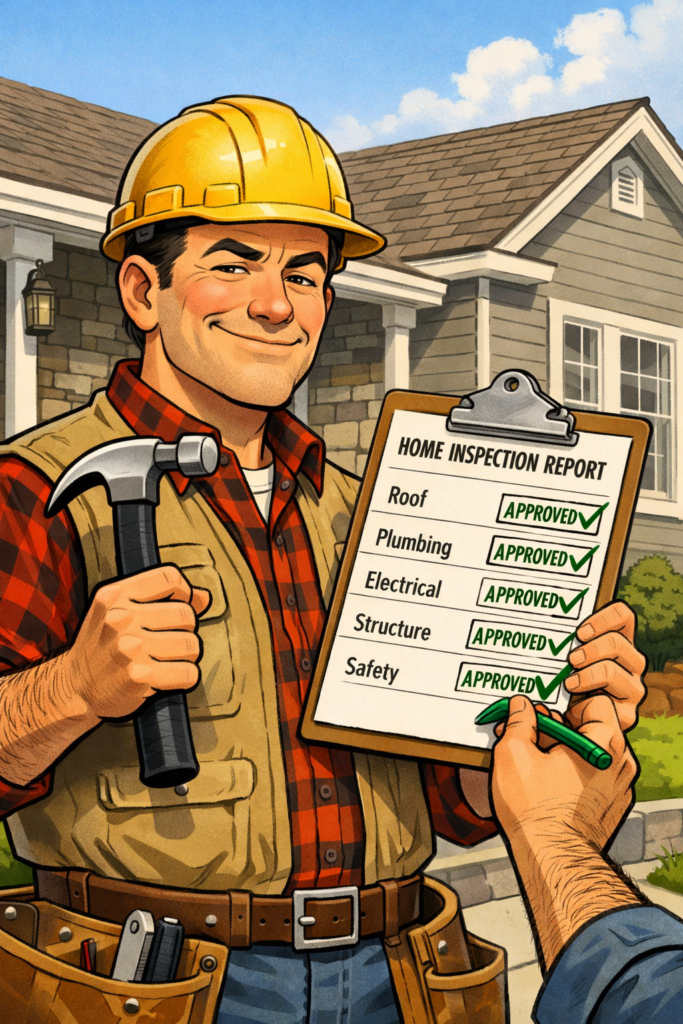
Not from the seller. Not from the real estate agent. Not from the contractor who wants the renovation job. You hire someone independent. Someone who gets paid the same whether the news is good or bad. Someone whose only job is to tell you what is actually true about the property before you sign.
This is so obvious that nobody argues with it.
Now apply that same logic to what is happening right now in the Salesforce ecosystem.
Companies are committing millions of dollars to AI, Agentforce, automation, and major platform changes. The vendor says the technology is ready. The implementation partner says the environment can handle it. The internal team says they are prepared.
Everyone sounds confident.
But in many cases, nobody independent has verified the foundation.
No one has pressure-tested whether the data is clean. Whether the processes are documented. Whether the automations are governed. Whether the integrations are stable. Whether the security model is sound. Whether the foundation can actually carry what is about to be built on top of it.
The people saying “we’re ready” are often the same people who benefit when the company moves forward.
That is not a conspiracy. That is just how the system works.
The vendor sells more when you buy more. The implementation partner bills more when you build more. The internal team is rewarded for momentum. Very few people in that room are paid to say, “Hold on.”
This Used to Be Survivable
For twenty years, this pattern created problems that were painful but manageable. A bad implementation meant rework. A weak integration meant delays. Poor process design meant drag.
It cost money. It wasted time. But it rarely threatened the credibility of the entire strategy.
AI changes that.
Because AI is not just another tool you add on top of what you already have.
The real value of AI comes from redesigning how work gets done. Agents that interpret context, write code, call APIs, move across systems, and handle work in parallel are not a bolt-on. They change the shape of execution itself.
That means this is not just an automation decision.
It is a workflow redesign decision.
And when you redesign execution on top of a weak foundation, you do not get slow failure.
You get faster failure.
Bad data becomes bad decisions at speed. Broken handoffs become automated mistakes. Unclear permissions become security exposure at scale. Messy processes become confident nonsense delivered faster than anyone can catch.
The old problems were survivable.
The new ones may compound faster than the organization can contain them.
The Person Who Carries the Risk
Here is the part that should bother you.
When this goes wrong, the vendor is rarely the one who carries the consequences. They sold the licenses.
The implementation partner is rarely the one who owns the long-term risk. They built what was scoped, and the scope was based on assumptions.
The AI itself is not accountable. It operated on top of the environment it was given.
The person who carries the risk is usually the one who inherited the platform.
The VP of IT. The Director of Enterprise Apps. The Salesforce owner who did not make the original architecture decisions but will be judged on the next one.
That person usually already knows the truth.
They know the org was not engineered. It was accumulated. Layer by layer, year by year, vendor by vendor. They know what looks stable on the surface often breaks under change.
Their problem is not awareness.
Their problem is evidence.
Because the people with the tools, access, and incentives to prove the truth are often the same people with a reason to keep the answer optimistic.
What Every Other Industry Figured Out
In every serious market, there is an independent verification step before major commitment.
In M&A, there is due diligence.
In real estate, there is inspection.
In finance, there is audit and independent review.
In the Salesforce ecosystem, skipping independent verification before a major AI or platform bet is still surprisingly common.
That is the gap.
Not a technology gap. Not a skills gap. Not an innovation gap.
A due diligence gap.
The Salesforce market has an implementation economy. What it still lacks is an independent inspection function.
There is often no standard independent step between “the vendor says we should do this” and “we committed the budget.”
No structural role for someone with nothing to sell on the other side of the answer.
This Is Not Anti-AI
This is not an argument against Salesforce. It is not an argument against AI. It is not an argument against moving fast.
It is an argument for checking the foundation before you build on it.
Because the more powerful the AI, the less acceptable it is to rely on assumptions. And right now, many companies are preparing to make the biggest platform bet of the last decade based largely on what the people selling the solution told them.
Nobody would treat a house that way.
Nobody would treat an acquisition that way.
Why are we treating AI that way?
Before you fund Agentforce, automation, workflow redesign, or any major platform change, one question matters more than any other:
Has anyone independent actually checked the foundation?
In every other serious market, that would be standard.
In Salesforce, it is still the exception.
That needs to change.
—
Mike Sommer writes Heartbeat, a publication on Salesforce, AI, and the missing discipline of independent due diligence before major platform bets.
Leave a Reply